
Understanding the Role of AI Employee
Defining AI Employee in Today’s Workforce
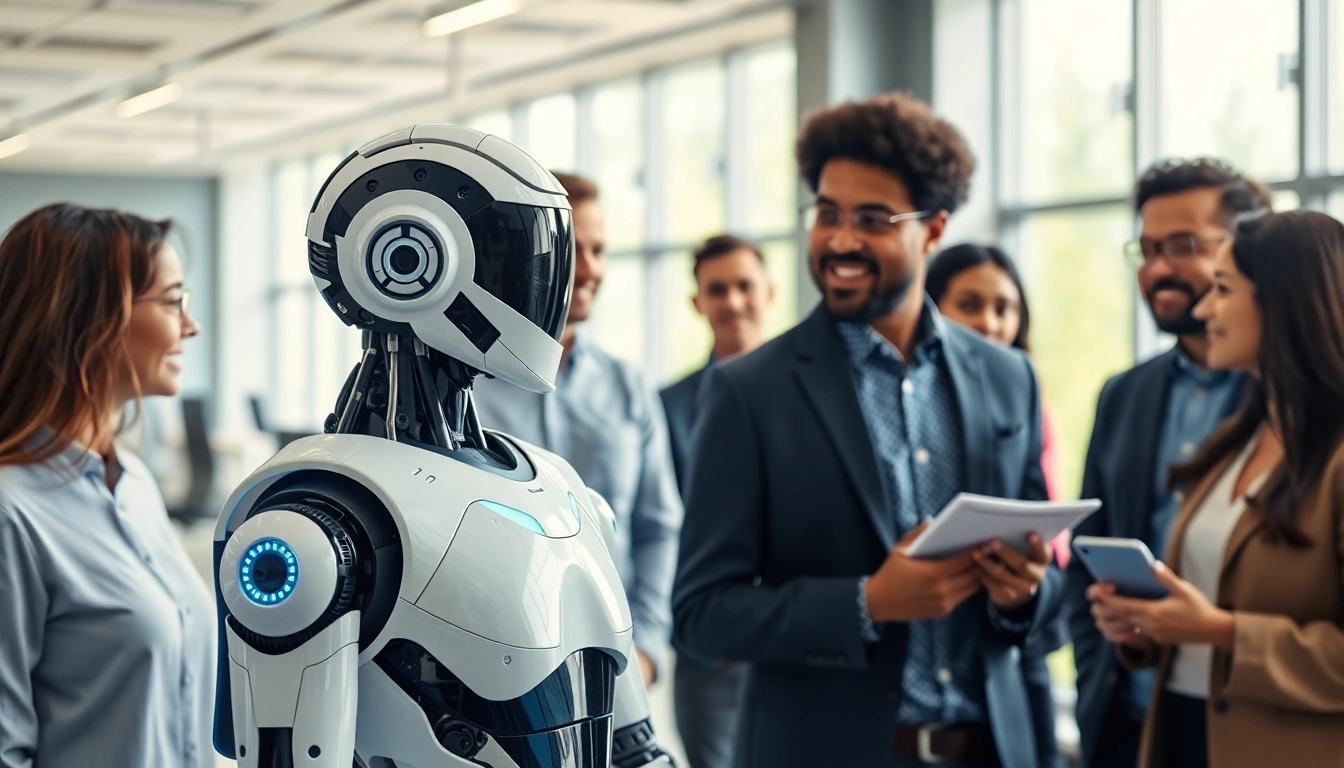
The term AI Employee refers to artificial intelligence systems that perform tasks, solve problems, and enhance productivity in the workplace. These AI entities are designed to operate autonomously or semi-autonomously while working alongside human employees. Unlike traditional employees, AI Employees can process vast amounts of data and execute repetitive tasks with remarkable efficiency. They are reshaping various industries, ranging from customer service to human resources, engineering, and beyond.
Types and Functions of an AI Employee
AI Employees can be categorized into several types based on their functions and applications:
- Chatbots and Virtual Assistants: These are AI applications that handle customer inquiries, set appointments, and provide information, simulating human interaction.
- Robotic Process Automation (RPA): RPA bots automate repetitive business processes, such as data entry, payroll processing, and invoice management, freeing employees to focus on strategic tasks.
- Data Analysis Systems: These AI tools analyze data trends and deliver insights, aiding in decision-making processes across various organizational levels.
- Predictive Analytics: Utilizing machine learning algorithms, these AI Employees forecast future trends based on historical data, helping businesses plan effectively.
Benefits of Incorporating AI Employee in Business Operations
The adoption of AI Employees in business operations presents numerous benefits:
- Enhanced Efficiency: AI Employees can operate 24/7 without fatigue, reducing time spent on mundane tasks.
- Cost Reduction: By automating processes, organizations can cut operational costs significantly.
- Improved Accuracy: AI systems minimize human errors, thereby increasing the quality of deliverables.
- Scalability: AI solutions can scale with business growth, adapting to increased workloads without the need for extensive additional resources.
- Data-Driven Insights: AI Employees provide valuable analytics that support strategy formulation and execution.
Implementation Strategies for AI Employee
Assessing Business Needs for AI Employee
Before implementing an AI Employee, it is crucial to assess the specific needs of the organization. This involves identifying repetitive tasks, evaluating current processes, and determining areas where efficiency can be enhanced through automation. Conducting a thorough analysis of workflow will help in selecting the right AI tools tailored to meet business objectives.
Choosing the Right Tools for AI Employee Integration
Not all AI tools are suitable for every business. Organizations should consider factors such as functionality, ease of integration, and scalability when selecting AI solutions. Reviewing case studies, customer testimonials, and conducting pilot tests can greatly aid in making informed decisions.
Setting Up for Successful AI Employee Collaboration
To ensure a smooth collaboration between human employees and AI systems, companies should prioritize training and development. Educating the workforce about AI’s role, capabilities, and limits fosters a growth mindset and builds trust. Additionally, businesses should create a feedback loop to continuously refine AI processes based on user experience and performance outcomes.
Challenges in Integrating AI Employee
Common Misconceptions about AI Employee
Misconceptions about AI can hinder its integration within organizations. Common myths include the belief that AI will entirely replace human jobs or that it can make complex decisions without human input. In reality, AI Employees are designed to complement human capabilities, allowing for a more productive working environment.
Overcoming Resistance to Change
Resistance to change often stems from fear of the unknown. Companies can mitigate this by communicating the benefits of AI and demonstrating its value through successful case studies. Engaging employees early in the process and addressing their concerns can promote acceptance and enthusiasm for AI integration.
Addressing Ethical Considerations
Workplace ethics surrounding AI must be prioritized. Organizations should establish clear guidelines on data privacy, bias in AI algorithms, and accountability for AI-driven decisions. Regular audits and transparent communication can help uphold ethical standards throughout the implementation process.
Performance Metrics for AI Employee Success
Defining Key Performance Indicators for AI Employee
Establishing key performance indicators (KPIs) is essential for measuring the success of AI Employees. Metrics may include time saved on tasks, accuracy rates, user satisfaction scores, and cost savings attributed to automation. Aligning AI performance metrics with organizational goals ensures clarity in evaluating its impact.
Measuring Productivity and Efficiency Improvements
Regular assessments of productivity before and after AI implementation will highlight the technology’s contribution to operational efficiency. Techniques such as benchmarking against industry standards can provide insights into areas for further optimization.
Evaluating Employee Experiences with AI Employee
Gathering feedback from human employees interacting with AI systems is crucial for continual improvement. Surveys, focus groups, and informal discussions facilitate understanding of user experience and identify areas needing attention.
The Future of the AI Employee
Trends Shaping AI Employee Development
The future of AI Employees is governed by several trends, including advancements in natural language processing, deeper integration with business processes, and increasing adaptability of AI systems. As AI technology evolves, we can expect the emergence of more sophisticated AI agents capable of complex decision-making across multiple functions.
Preparing for AI Employee in the Evolving Workforce
Organizations should prepare for a future that integrates AI Employees through continuous learning and adaptability. Reskilling programs and fostering a culture of innovation will equip the workforce to thrive alongside AI, ensuring seamless operations as demands change.
Opportunities for Continuous Learning with AI Employee
As AI technology grows more advanced, opportunities for continuous learning will expand. Employees will be encouraged to upskill and stay updated on the latest AI developments, driving not only personal career growth but also enhancing overall organizational capabilities.
Frequently Asked Questions
What is an AI Employee?
An AI Employee is an artificial intelligence system that automates tasks and processes in a business setting, enhancing efficiency and productivity while working alongside human employees.
How can businesses assess their needs for AI Employees?
Businesses can assess their needs by analyzing current workflows, identifying repetitive tasks, and evaluating areas where automation can save time and resources.
What are some benefits of integrating AI Employees?
Benefits include enhanced efficiency, cost reduction, improved accuracy, scalability, and access to data-driven insights, leading to better business decisions.
What challenges might organizations face when integrating AI Employees?
Organizations may face challenges such as resistance to change, misconceptions about AI, ethical considerations, and the need for continuous employee training.
How can businesses measure the success of AI Employees?
Success can be measured through key performance indicators (KPIs), productivity and efficiency improvements, and evaluating employee experiences with the AI systems employed.