
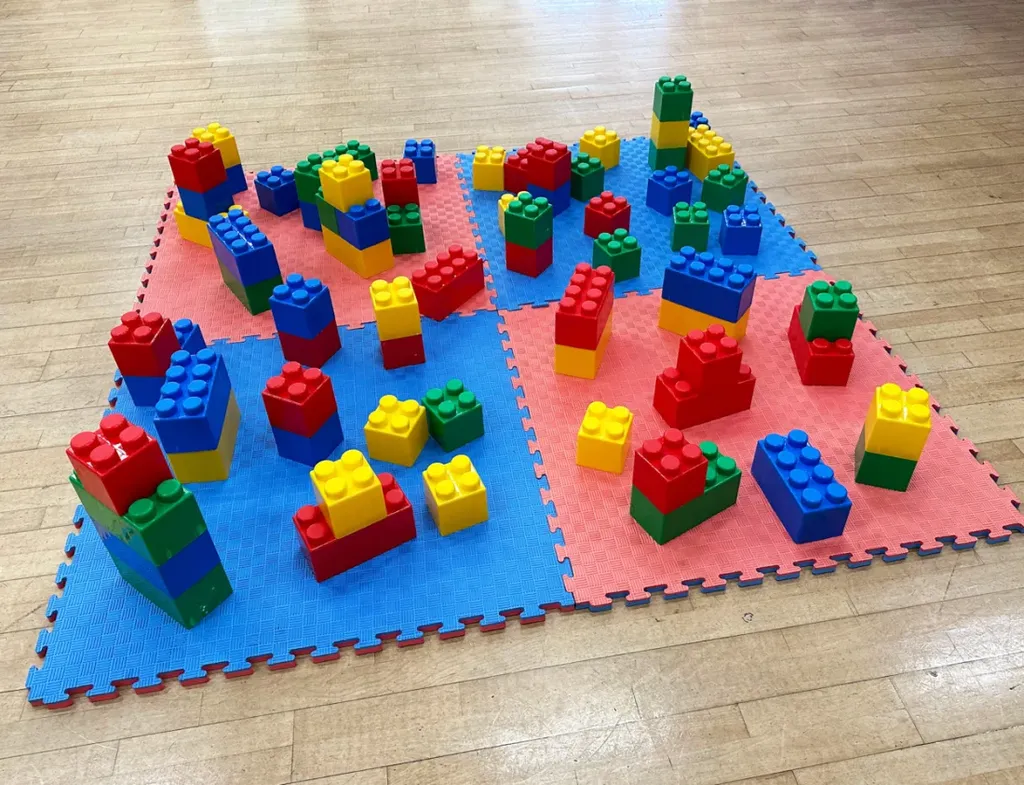
Giant Building Blocks are a fantastic option for children who enjoy creative construction while parents and educators prioritize comfortable, gentle play. Giant Building Blocks provide oversized pieces that can be stacked, arranged, and combined to create imaginative structures without relying on complicated electronic features. With Giant Building Blocks, children can explore their creativity, practice coordination, and enjoy hands-on entertainment in a more comfortable play environment. From playrooms and classrooms to daycare centers and indoor activity areas, these large construction pieces can make everyday play more engaging.
Why Choose Giant Building Blocks for Soft Play?
Soft play is designed to give children opportunities to move, explore, and interact with their surroundings in a child-friendly environment. Traditional hard construction toys can sometimes be unsuitable for certain play spaces, particularly where children are encouraged to build directly on the floor.
Soft or lightweight oversized blocks offer an alternative. Depending on their material and design, they can be easier for young children to lift, position, stack, and rearrange.
Comfortable Materials for Children
Many soft construction blocks are produced using materials such as foam or other lightweight materials. These materials can provide a softer surface than rigid plastic or wooden pieces.
When choosing Giant Building Blocks, parents and educators should consider the product's construction, surface finish, durability, and age recommendations. A well-designed set should be easy to handle and suitable for the intended environment.
Lightweight Pieces for Easy Handling
Large blocks do not have to be heavy. Lightweight construction pieces allow children to participate independently without struggling to move every component.
This can be especially useful for younger children who are still developing their physical coordination. They can pick up a block, carry it to their chosen location, and carefully place it into their structure. For more information about large building blocks for kids, explore their features, benefits, age suitability, and role in encouraging imaginative and educational play.
Benefits of Giant Building Blocks for Child Development
Safe and comfortable play can still provide meaningful learning opportunities. Building activities naturally encourage children to think, experiment, and solve problems.
Developing Hand-Eye Coordination
Children must look at a structure while positioning each block. They learn to estimate where a piece should be placed and adjust their movements accordingly.
Giant Building Blocks provide repeated opportunities to practice these movements. Stacking, aligning, moving, and separating pieces can gradually improve coordination and body awareness.
Supporting Spatial Awareness
Construction play introduces children to basic spatial concepts. They learn about height, width, distance, balance, position, and direction through practical experimentation.
For example, a child may discover that a tall structure requires a stable foundation or that a particular piece needs to be moved to create enough space.
Encouraging Problem-Solving
Not every structure works on the first attempt. A tower may lean, a wall may become unstable, or a design may not fit within the available space.
Instead of seeing these moments as failures, children can treat them as construction challenges. They can rearrange their blocks and test a new solution.
Creating Soft Indoor Play Experiences
Giant Building Blocks can be especially useful for indoor environments where parents and educators want children to remain active while maintaining a comfortable atmosphere.
Playrooms and Bedrooms
A dedicated building corner can provide children with a creative activity that does not require a screen. Blocks can be stored in baskets or containers and brought out when children want to construct something.
A carpet or play mat can create an additional comfortable surface for floor-based building.
Classrooms and Daycare Centers
Teachers can incorporate oversized blocks into free-play stations or structured learning activities. Children can work individually or cooperate on larger projects.
Giant Building Blocks can also be used for storytelling. Children might build a castle before creating a story about the characters who live inside it.
Indoor Activity Areas
Indoor play centers can use large construction pieces alongside other age-appropriate activities. Because the blocks are versatile, children can repeatedly create different designs instead of completing only one predetermined activity.
Creative Activities With Giant Building Blocks
The open-ended nature of construction blocks makes it easy to introduce new games and challenges.
Build a Safe Tower
Ask children to construct the tallest tower they can while keeping it stable. This encourages careful placement and introduces basic ideas about balance.
Children can compare different foundations and see which designs provide greater stability.
Create a Soft-Play Castle
Children can use large pieces to build walls, rooms, entrances, or towers. Once the structure is complete, they can turn it into a castle for imaginative role-play.
This combines construction with storytelling and social interaction.
Design a Mini City
Encourage children to build several structures and connect them into a miniature community. They can create homes, shops, schools, parks, roads, or imaginary transportation stations.
This activity can become even more engaging when children explain what each building is used for.
Safety Considerations When Choosing Giant Building Blocks
While soft construction toys can provide a comfortable play experience, parents should still evaluate products carefully.
Check Age Recommendations
Always select blocks appropriate for the child's age and developmental stage. Follow the manufacturer's guidance regarding use, supervision, and product limitations.
Inspect the Construction
Before allowing children to play, examine blocks for damage, loose parts, tears, cracks, or other signs of wear. Damaged pieces should be removed from use.
Consider the Play Surface
Place blocks on a stable, comfortable surface that provides sufficient space for construction. Keep the building area away from sharp furniture edges, stairs, or other potential hazards.
Encourage Responsible Play
Children should learn to carry and place blocks carefully rather than throwing them. Simple rules can help keep play organized and enjoyable.
Choosing the Right Set
The best set depends on the children's ages, available space, and intended activities.
Consider Block Size
Large pieces can make structures more visible and easier to construct, but they also require more storage space. Consider how much room is available before selecting a set.
Look at the Number of Pieces
A smaller collection may be enough for one child creating simple structures. Larger groups may benefit from having more pieces available for collaborative construction.
Think About Colors and Shapes
Different colors and shapes can add variety to construction activities. Children can use colors to create patterns or assign different pieces to specific parts of a structure.
How Giant Building Blocks Encourage Independent Play
One of the most valuable features of open-ended construction toys is that children can decide how they want to use them. They do not necessarily need an adult to explain every step.
Giant Building Blocks allow children to choose a project, gather materials, build their design, identify problems, and make improvements. This encourages independence and gives children a sense of accomplishment when they complete something they designed themselves.
Parents can support this process by asking questions instead of taking over. Asking “What are you building?” or “How could you make it stronger?” encourages children to explain their thinking and develop their own solutions.
Combining Safety With Creativity
Soft construction play demonstrates that safety and creativity do not have to compete. Children can have an engaging experience while using materials and designs appropriate for their environment.
Giant Building Blocks can become a valuable part of a balanced play routine that includes creative construction, movement, storytelling, and social interaction. Their versatility allows the same pieces to be used in many different ways as children grow and develop new skills.
Frequently Asked Questions
1. Are Giant Building Blocks suitable for soft play?
Many Giant Building Blocks are designed with lightweight or softer materials that can work well in soft-play environments. However, parents should always check the specific product's materials, construction, and recommended age range.
2. What are the benefits of soft building blocks?
Soft building blocks can provide comfortable handling while encouraging creativity, coordination, spatial awareness, problem-solving, and imaginative play.
3. Can toddlers use Giant Building Blocks?
Some oversized blocks are suitable for toddlers, but suitability depends on the individual product. Always follow the manufacturer's age recommendation and supervision guidance.
4. How can I make block play safer?
Provide enough open floor space, choose age-appropriate blocks, inspect pieces regularly, and teach children to carry and place blocks carefully. A suitable play mat can also create a comfortable building surface.
5. Can Giant Building Blocks be used for educational activities?
Yes. Teachers and parents can use them for counting, sorting, pattern recognition, spatial activities, STEM-inspired challenges, storytelling, and cooperative construction projects.
Conclusion
Giant Building Blocks combine creative construction with a comfortable approach to children's play. Their large format gives children opportunities to stack, arrange, experiment, and create while developing important physical and cognitive skills. When appropriately designed and selected for the child's age, soft or lightweight construction pieces can become an enjoyable addition to homes, classrooms, daycare centers, and indoor activity areas.
From building towers and castles to creating miniature communities, the possibilities are limited mainly by imagination. With proper supervision, suitable materials, and a well-organized play area, Giant Building Blocks can help children experience hands-on learning while enjoying soft, creative, and engaging play.